No products in the cart.
The Archetype of the Apocalypse: Analyzing the Pandemics of Racism, COVID-19, and Climate Change from a Jungian Perspective Paperback – April 26, 2023
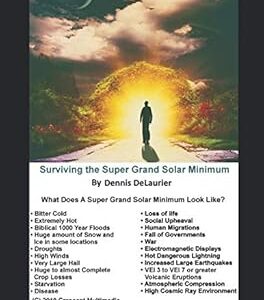
What we are witnessing in the present time in human history, in the 2020s, is a vortex of intersecting pandemics — jolting revelations that are unfolding with a terrific energy and force — so much so that we cannot ignore or escape them. These include worldwide pandemics of racism, COVID-19, and climate change. This book argues that all of these swirling pandemics are manifestations of the archetype of the Apocalypse, which is constellating now in a very powerful way. Any one of these phenomena could swallow humanity whole as a species. Altogether, they represent a seemingly overwhelming challenge for us to meet over the next century of life on earth. If humanity cannot meet the challenge of these combined negative forces, it could simply perish. A multilayered intersecting set of challenges such as this has never before occurred in human history. We must therefore be alert to what is going on, and consciously mediate these threats, both individually and collectively. They offer an unprecedented opportunity for humanity to evolve and grow psychologically, both individually and collectively, nationally, and globally
- ASIN : B0C2SFPMXP
- Publisher : Independently published (April 26, 2023)
- Language : English
- Paperback : 253 pages
- ISBN-13 : 979-8386731243
- Item Weight : 15.8 ounces
- Dimensions : 6 x 0.57 x 9 inches
$15.00Add to cart Add to cart$20.00The Fall of Western Civilization: How Liberalism is Destroying the West from Within Paperback – Illustrated, April 15, 2018 by Shivaji Lokam (Author)
Can Western civilization stop its decline? The West gave the World the light bulb, the internal combustion engine and much more that vastly improved the life on earth. But lately, the West is tired, hopeless, and dying. Author Shivaji Lokam says Western countries have been in a self-destruction mode for the past hundred years: first the two World Wars, then the Cold War, now the Experts-driven utopian pursuit of Open Borders and Multiculturalism.
The unaccountable experts have been wrong more times than anybody can count. They were wrong on financial crisis, bailouts, stagnant wages, higher taxes, brexit, trump, global trade deals. The experts failed because they were part of the problem. This incredible book tells the story of why they get it wrong every time and their pivotal role in causing the irreversible Western decline.
In The fall of Western Civilization you will learn:
- How Classical Liberalism caused World Wars, Great Depression, Socialism, Fascism, Cold War, and Decolonization
- Why Modern Liberalism wants nothing short of the full destruction of the West and its values
- Why the West is becoming less free
- How America and Europe’s destruction were long sown in the novel ideas that came out of the European Enlightenment two hundred years ago
- Why the elites in the West are utterly clueless and how their fancy education never contributed anything positive
- What were the ultimate causes of the 2008 Financial Crisis that crippled the western economies
Based on extensive research and fresh understanding of economics, Author Shivaji Lokam weaves through the forces of industry, technology, human nature, religion, and nation-state, to tell how and why the West is collapsing.
Original and fresh, The fall of Western Civilization is essential reading to understand why Liberalism has been the greatest hoax ever played on the West.
 $35.00
$37.005% offAdd to cart Add to cartThe Fall of Western Civilization: How Liberalism is Destroying the West from Within Paperback – Illustrated, April 15, 2018 by Shivaji Lokam (Author)
$35.00$37.005% offThe Politics of Immigration: Contradictions of the Liberal StateJames Hampshire
The Politics of Immigration: Contradictions of the Liberal State
The Politics of Immigration: Contradictions of the Liberal State
Immigration is one of the most contested issues on the political agenda of liberal states across Europe and North America. While these states can be open and inclusive to newcomers, they are also often restrictive and exclusionary. The Politics of Immigration examines the sources of these apparently contradictory stances, locating answers in the nature of the liberal state itself.
The book shows how four defining facets of the liberal state – representative democracy, constitutionalism, capitalism, and nationhood – generate conflicting imperatives for immigration policymaking, which in turn gives rise to paradoxical, even contradictory, policies. The first few chapters of the book outline this framework, setting out the various actors, institutions and ideas associated with each facet. Subsequent chapters consider its implications for different elements of the immigration policy field, including policies towards economic and humanitarian immigration, as well as citizenship and integration. Throughout, the argument is illustrated with data and examples from the major immigrant-receiving countries of Europe and North America.
This book will be essential reading for students and researchers in migration studies, politics and international relations, and all those interested in understanding why immigration remains one of the most controversial and intractable policy issues in the Western world.
$65.00Add to cart Add to cart$70.00The Politics of Immigration: Partisanship, Demographic Change, and American National Identity
This book helps us to understand the future of immigration, the policy debates, and the national identity in the United States. … its empirical material and theoretical approach can equip scholars, researchers, and students with the analytical tools to understand the current impasse in the immigration debate and to identify the levers of political power needed for equitable and just change.” — Mark Bergfeld, ILR Review“Wong offers an important explanation of how partisanship and demographic change influence efforts to reform immigration policy. In addition, his detailed and insightful discussion of the major immigration controversies of our era makes The Politics of Immigration an excellent resource for those who wish to learn more about the multiple dimensions of contemporary immigration debates.” — Perspectives on Politics
Book Description
Focuses the analytical lens on the electoral incentives that legislators in Congress have to support or oppose immigration policy reforms at the federal level.$145.00$150.00Add to cart Add to cartThe Politics of Immigration: Partisanship, Demographic Change, and American National Identity
$145.00$150.00The Search for Apocalypse: The Politics of Fear in the Era of Pandemics, Climate Change, and Cultural
In “The Search for Apocalypse,” author Michael R. Hutchinson delves into the compelling intersections of social media psychology, political theory ideologies, and the power of persuasion in politics. This thought-provoking, free-thinking book probes deep into how our social beliefs systems—from conspiracy theories to climate change crisis narratives—are manipulated by propaganda and woke fake news.
Drawing upon a wide range of historical, scientific, and philosophical perspectives, Hutchinson questions the prevalent societal norms that often rely on ‘proof by consensus.’ He uncovers the hidden mechanisms that fuel our collective anxieties, from topics ranging from Religion, Democracy, and Political Mass Control to sensationalism and post-truth politics. As we navigate through an era increasingly dictated by alarmist politics and media spin, Hutchinson argues that our responses are not merely reactionary but are outcomes dictated by our genetically inherited herd instinct.
As we find ourselves entangled in a web of mass persuasion, mainstream narratives, cancel culture, and alternative facts, are we merely prisoners of our own primal fears? Find the answers for yourself in “The Search for Apocalypse.”
limate Crisis and War: Narratives of our Fears
In “The Search for Apocalypse”, Michael R Hutchinson delves into the psychology of our primal fears, weaving a narrative around war conflict, social disasters, and the looming climate change crisis. Drawing from historical events, political theory, and scientific theories, he exposes the profound influence of social media on our social belief systems and addresses the rise of prevailing ideologies in today’s post-truth era.

Decoding Fake News: The Art of Mass Persuasion
Hutchinson confronts the persuasive powers of political spin, propaganda, and the manipulation tactics of alarmist politics. Touching on the psychology of mass persuasion, he highlights the dangers of systems like fake news, alternative facts, and conspiracy theories. His exploration questions the prevalent societal norms relying on ‘proof by consensus’, revealing the mass control exerted through these mediums.

Woke Movement,Cancel Culture & Democracy’s Core
Evoking past prophecies, from religious doomsday scenarios to global warming hoaxes, Hutchinson critiques cancel culture, the ‘woke’ movement, and the foundations of democracy itself. He argues our reactions are not just responses to cherry-picked threats, but outcomes shaped by our inherited survival instincts, greatly influenced by ideologies, and further amplified by manipulative media and political persuasions.

Free Thought in a World of Political Deception
This free-thinking book dives deep, confronting our inner anxieties in a world rife with pollution, political ideologies, and the challenges of the climate change crisis. Asking: Are we mere prisoners to our fears, swayed by mass persuasion? Hutchinson urges readers to critically evaluate, resist the influence of propagandist beliefs, and champion genuine facts over deceptive narratives.
Publisher : Mulberry House Publishing (November 1, 2023)
Language : English
Paperback : 241 pages
ISBN-10 : 1739577205
ISBN-13 : 978-1739577209
Item Weight : 11.5 ounces
Dimensions : 6 x 0.55 x 9 inches
$25.00$30.00Add to cart Add to cartThe Search for Apocalypse: The Politics of Fear in the Era of Pandemics, Climate Change, and Cultural
$25.00$30.00Together: The Healing Power of Human Connection in a Sometimes Lonely World Audio Book
https://communityfinders.com/community-living-books/
Together: The Healing Power of Human Connection in a Sometimes Lonely World by Vivek H Murthy M.D Audio book annotation. You can order full audiobook here in comments Female Voice by E.M. for www.Noahsarkshop.com community members and likeminded people https://communityfinders.com/community-liv… == https://communityfinders.com /community-living-books/ Instant New York Times Bestseller! The book we need NOW to avoid a social recession, Murthy’s prescient message is about the importance of human connection, the hidden impact of loneliness on our health, and the social power of community. Humans are social creatures: In this simple and obvious fact lies both the problem and the solution to the current crisis of loneliness. In his groundbreaking book, the 19th surgeon general of the United States Dr. Vivek Murthy makes a case for loneliness as a public health concern: a root cause and contributor to many of the epidemics sweeping the world today from alcohol and drug addiction to violence to depression and anxiety. Loneliness, he argues, is affecting not only our health, but also how our children experience school, how we perform in the workplace, and the sense of division and polarization in our society. But, at the center of our loneliness is our innate desire to connect. We have evolved to participate in community, to forge lasting bonds with others, to help one another, and to share life experiences. We are, simply, better together. The lessons in Together have immediate relevance and application. These four key strategies will help us not only to weather this crisis, but also to heal our social world far into the future. Spend time each day with those you love. Devote at least 15 minutes each day to connecting with those you most care about. Focus on each other. Forget about multitasking and give the other person the gift of your full attention, making eye contact, if possible, and genuinely listening. Embrace solitude. The first step toward building stronger connections with others is to build a stronger connection with oneself. Meditation, prayer, art, music, and time spent outdoors can all be sources of solitary comfort and joy. Help and be helped. Service is a form of human connection that reminds us of our value and purpose in life. Checking on a neighbor, seeking advice, even just offering a smile to a stranger six feet away, all can make us stronger. During Murthy’s tenure as Surgeon General and during the research for Together, he found that there were few issues that elicited as much enthusiastic interest from both very conservative and very liberal members of Congress, from young and old people, or from urban and rural residents alike. Loneliness was something so many people have known themselves or have seen in the people around them. In the book, Murthy also shares his own deeply personal experiences with the subject–from struggling with loneliness in school, to the devastating loss of his uncle who succumbed to his own loneliness, as well as the important example of community and connection that his parents modeled. Simply, it’s a universal condition that affects all of us directly or through the people we love—now more than ever. 10.22.2025 ==== We are doing everything wrong. Imagine a society in which small groups of people were rewarded, not for defeating another group, but for providing aid to another group. American Football in which one side decided to not defend their goal, rather, they invited the other side to a book club and a picnic at their end of the playing field. We can go to Mars, but we just can’t figure out how to end poverty. Too hard. Too mysterious. Masculinity is not measured by how many people you boss, but by how many people you help. Mutual Aid. Q: What is Direct Democracy? A: People live in groups. Direct democracy, depending on how this term is defined, is the best method for groups of people to make collective decisions. By direct democracy, I don’t mean majority rule through voting. Direct democracy is best practiced using consensus decision-making. There is no such thing as “representative democracy.” This is a liberal bourgeois term that doesn’t mean anything because democracy is not a hierarchical system of power, and every attempt to shift collective power to individuals has created an oligarchy. Delegates are different from representatives in that delegates are not elected and they aren’t given power of decision-making. Delegates negotiate and coordinate, whereas representatives are invested with unchecked decision-making power. Capitalist-state structural violence leads to social murder. The denial of food and healthcare, blatant examples. To escape alone is impossible. Turn off the TV and ask a friend for help. Cult deprogramming. We can go to Mars, but we just can’t figure out how to end poverty. Too hard. Too mysterious. Masculinity is not measured by how many people you boss, but by how many people you help. Mutual Aid
$20.00Contact UsAdd to cart$25.00